
Are you looking for a way to revamp your spelling block?? Are half of your kids “acing” every test and the other half failing every test?? That is what was happening in my class when I decided there MUST be a better way!!
Every student in your class should be able to work at their OWN level, right where they are ready to learn!!!
Not only do students love to work at their own level (some of your students will FINALLY be able to feel successful in spelling while others will FINALLY feel challenged!) but the parents will love it, too!! The parents will really appreciate you taking the time to place their student at a level of learning that is not only accessible to them, developmentally, but also challenging enough to create growth, not frustration or boredom.
Here is what I sent to parents when I switched to this method of spelling implementation:
| To the parents of my high/grade-level spellers: | To the parents of my struggling spellers: |
| “Good afternoon! I wanted to let you know that I have changed up spelling a bit this week and am pretty excited/hopeful that it will be much more beneficial to (his/her) learning. I saw that __ was not being challenged with the spelling we had been doing and when I gave (him/her) a spelling inventory to see what level (he/she) is at, (he/she) is (well) above grade level. So we are trying out a new spelling – at (his/her) specific level! (He/She) will take a pretest every Monday and only really need to practice the words that (he/she) misses, since the ones (he/she) gets right (he/she) will have already demonstrated proficiency with. So, while (he/she) will have around 20 words a week, all following specific spelling patterns, they will be at (his/her) level of development for growth and (he/she) should only really have about 5-10 (missed words from the pretest) to actually study and practice per week which will be circled on the spelling list attached to the homework page. We will be studying all of the words and their spelling patterns during class time. Please encourage your student if they feel down for not “acing” every test anymore – let (him/her) know that that is actually a good thing and we are finally working on skills (he/she) doesn’t have yet!! (He/She) doesn’t have to be bored practicing things (he/she) already knows anymore – it will be good to have a challenge! I would like to warn you, however that this feeling of not having the prior knowledge anymore may be tough for (him/her) but it is good to finally have a chance to practice how we approach tasks and skills that we have not yet learned, since __ is pretty used to already being good at everything we do in class, this year and in previous years! It is time for a challenge” | “Good afternoon! I wanted to let you know that I have changed up spelling a bit this week and am pretty excited/hopeful that it will be much more beneficial to (his/her) learning. I saw that the spelling we had been using was not transferring well into reading and writing practice. I gave (him/her) a spelling inventory to see what level of development (he/she) is at, and it was very informative as to what (he/she) is -ready- to learn! So, we are trying a new spelling – at (his/her) specific level! (He/She) will take a pretest every Monday and only really need to practice the words that (he/she) misses, since the ones (he/she) gets right (he/she) will have already demonstrated proficiency with. So, while (he/she) will have around 20 words a week, all following specific spelling patterns, they will be at (his/her) level of development for growth and (he/she) should only really have about 5-10 (missed words from the pretest) to actually study and practice per week which will be circled on the spelling list attached to the homework page. We will be studying all of the words and their spelling patterns during class time. I am really excited to see how studying patterns in spelling will not only improve (his/her) spelling test scores but also transfer over into (his/her) reading as well!” |
Here’s what I heard back from parents:
| From the parents of high/grade-level spellers: | From the parents of my struggling spellers: |
| “I thought the words were too easy for __ too. Thank you for challenging that big ol’ brain of __!” “I wondered about that when __ got out __ homework today. I agree that __ needs to be challenged. I really appreciate you working to challenge __! __ really enjoys your class and I always hear wonderful things so thank you for working so hard. I really appreciate everything you do.“ “That sounds like a good idea!” “Oh wow, cool! Sounds great.” | “Excited for this change! __ has a terrible time trying to memorize the random words from before. But learning words that all follow a pattern should be better for __. “ “That sounds great! Thank you so much for all you do.“ “Thank you for helping __ learn and being so patient!“ “That sounds great!” “I saw the list, and this sounds great to me.“ “That sounds wonderful.“ “__ seems very happy about having 20 words! __ is doing good practicing them at home!!” |

How to get started:
First, I give all of my students the primary inventory to find what spelling patterns they already know and have not yet learned.
If they do very well on the first one, I also give one or both of the subsequent inventories. Elementary Spelling Inventory Upper Elementary Spelling Inventory
To give the inventories, I pass out a paper that I have already numbered 1-26, skipping lines. I explain to the students that this is not for a grade, it is for ME to know how to teach them better. I explain that they will know how to spell some of the words but that the words will get harder as we go and they won’t know how to spell them. That is OKAY and EXPECTED. I explain that it is important that they TRY to spell even the really hard words, because even if they spell it wrong, HOW they spell it wrong helps me to know what they are ready to learn. (By giving this speech, I haven’t had any kids leave a word blank. It motivates them to try on each one).
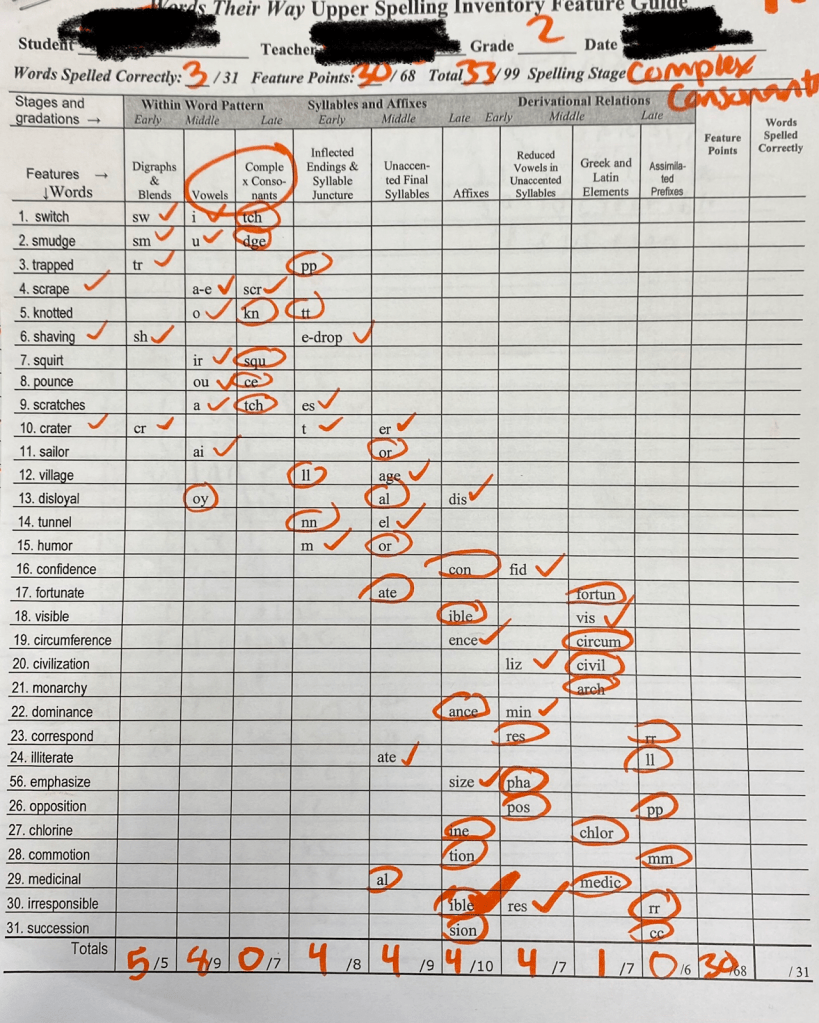
Then, you grade them. Print off one of the sheets above for each student. Look at their spelling test. You are not grading for words correct, but rather for patterns correct. For example:
- If they spelled, “rob”, and “robe”, they would still get a checkmark ✅ for “r” “o” and “b” because they got those letter sounds.
- If they spelled, “wait”, as “wate”, they would get a checkmark ✅ for “w” and “t” but you would circle “ai” because they missed that pattern.
- If they spelled “shouted”, as “shoutid”, you would still give a checkmark ✅ for “sh” and “ou” but you would circle “-ed” because they missed that pattern.
—> when you have finished doing this for all of their words, you tally at the bottom how many of each column they got correct. You will easily be able to see where their prior knowledge ends and where they are ready to start learning.


Then, cross reference what spelling patterns they were missing with which lists have those patterns. Print off one of these reference sheets per student (or put one in a plastic sheet protector and use dry erase) Go through and circle every pattern that they had missed on their pretest(s) until you the list where their prior knowledge seemed to end and learning was ready to begin. Place them to begin at the earliest list with pattern missed (unless that pattern is repeated on a later list, then start at the next lowest list).
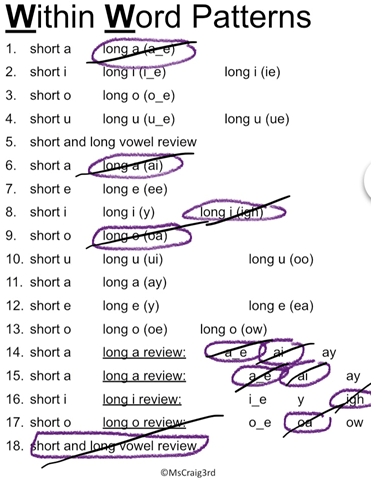
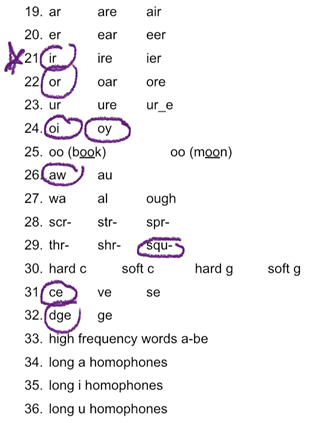
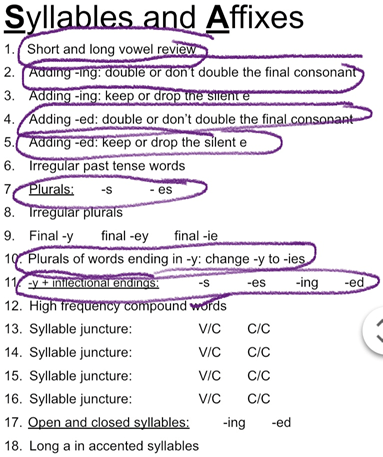
Here is how I cross referenced the student whose spelling inventories are shown above. I started by circling all of the patterns he had missed, then I went through and crossed off the patterns that repeated, because they will be studied again later. Then I found where his prior knowledge ended and he was ready to learn: WW 21. As you can see I didn’t mark what he was missing all the way into the latter half of SA since I knew he wouldn’t be starting all the way there.

How I have it set up in the classroom:
Here is what the WTW Differentiated Spelling List Tracker / Placement Charts chart looks like in my classroom. As you can see, I drew slashes through all of the lists they skipped over due to the initial inventory. The list they are to work on for the week is the one that is circled.

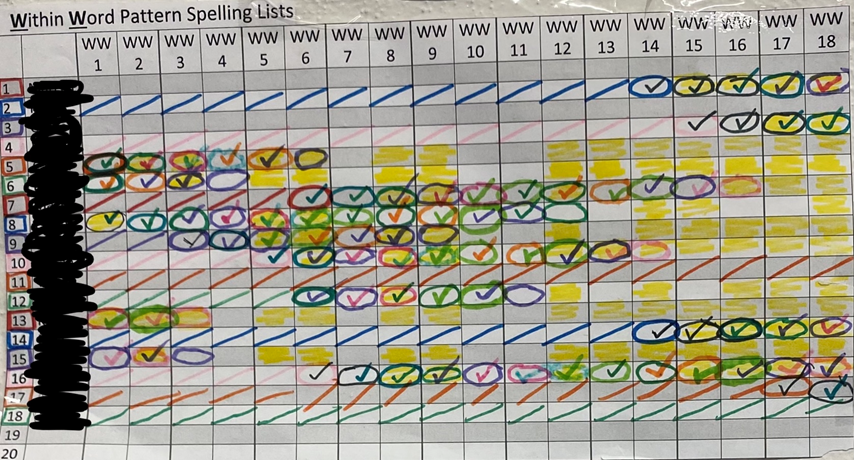

At the end of the week, if they pass the spelling test (I only allow them to miss up to two words to pass), then I put a checkmark and circle the next list. If they do not pass (miss 3 or more words) then I do nothing and the current list stays circled. They will have the same list next week.
Here is an example of the set up that my students use independently in the classroom. This is where they find the spelling lists, word sorts, spelling tiles, and word searches.


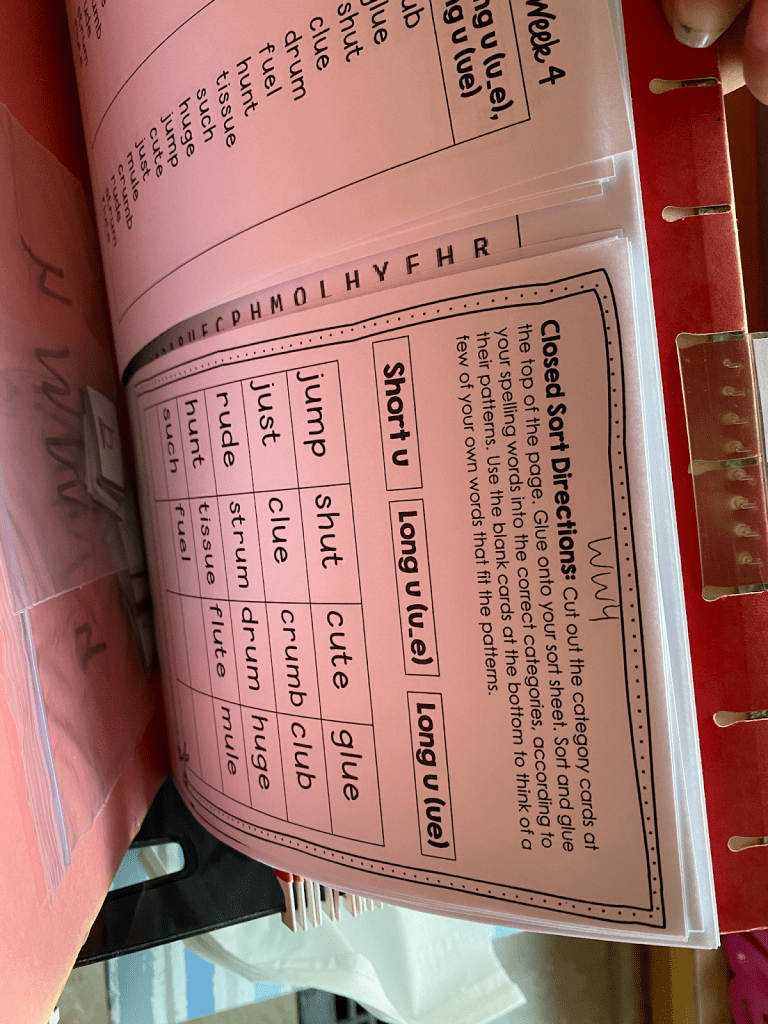

How it works during the week:
This is what I have posted in the Seesaw Inbox for my students to find the links for spelling:
MONDAY/FRIDAY:
Pretest/Spelling test ———————–> LNA: (video link)
Pretest/Spelling test ———————–> WW: (video link)
Pretest/Spelling test ———————–> SA: (video link)
The link posted on Mondays and Fridays for the pretest and spelling test are the same links. I recorded myself giving each spelling test, reading the words and sentences, and showing how to set up their page for the pre and post tests. Videos can be bought on tpt.
TUESDAY/THURSDAY: Spelling Choice
One of the choices is making your words with letter tiles, and I created sets to go with each list, only including the letters needed for those.
WEDNESDAY: Word Sort and Word Search
Monday Directions:
Every Monday morning I get their new list(as marked on the chart), and staple it to their homework. I put these in their mailboxes. The lists are from the same resource on TPT as the word sorts.
At the beginning of spelling, the students look for their lists on the chart. They then open their spelling notebooks, put in headphones, and use the pretest link above to listen to their spelling test. After they are finished, they go to their mailbox and get their homework with the list on it. It has 2 lists so they cut it up the middle and glue one of them into their spelling notebook next to the pretest. Then they check each of their words: checkmark ✅ the ones that are correct, circle the ones that are wrong. The circled words are what they will be studying for the week – NOT all 16-24 words. They also circle those same words on the list still attached to their homework so they and their parents know what words to practice as well.


(I explain to them that this is for them to know which words they need to study for the week to be able to ace the test on Friday, so it doesn’t do them any good to lie and change how they spelled words or checkmark words that were wrong, since I will not be looking at this and it isn’t for a grade. After this speech, the kids are always honest with this, though some of your lower spellers/readers might not be able to self assess and need some help.)
Tuesday and Thursday Directions:
On both of these days, students use the spelling choice link to choose ways they would like to practice their CIRCLED (missed on the pretest) words. Here are some examples of what this looks like:
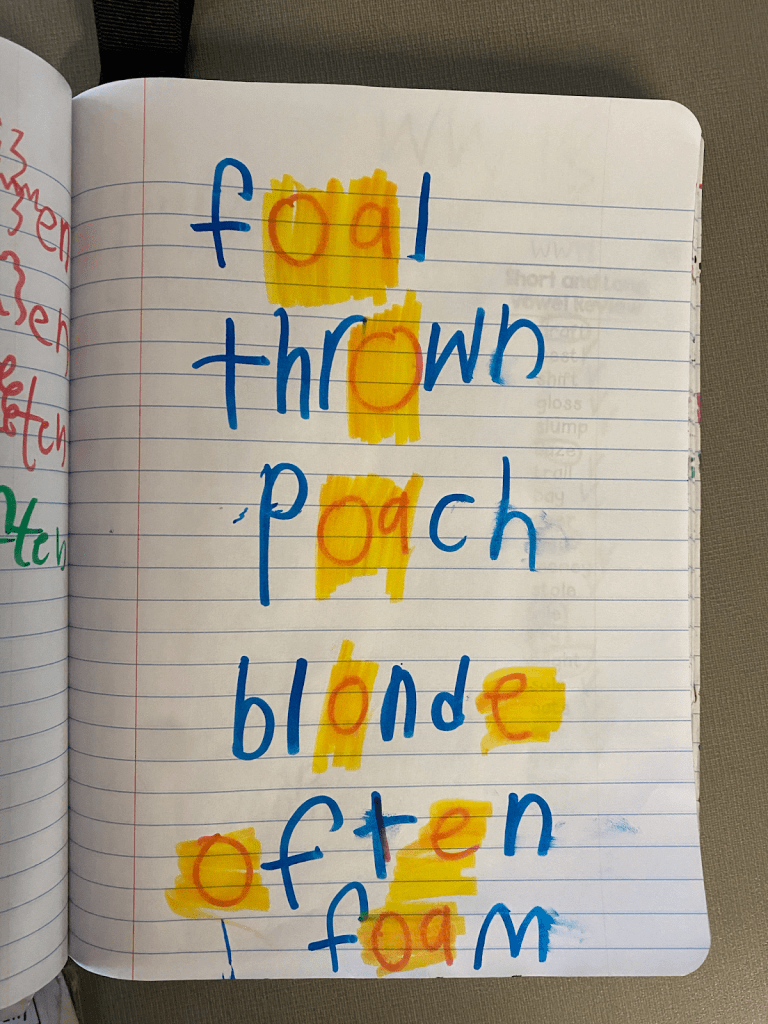
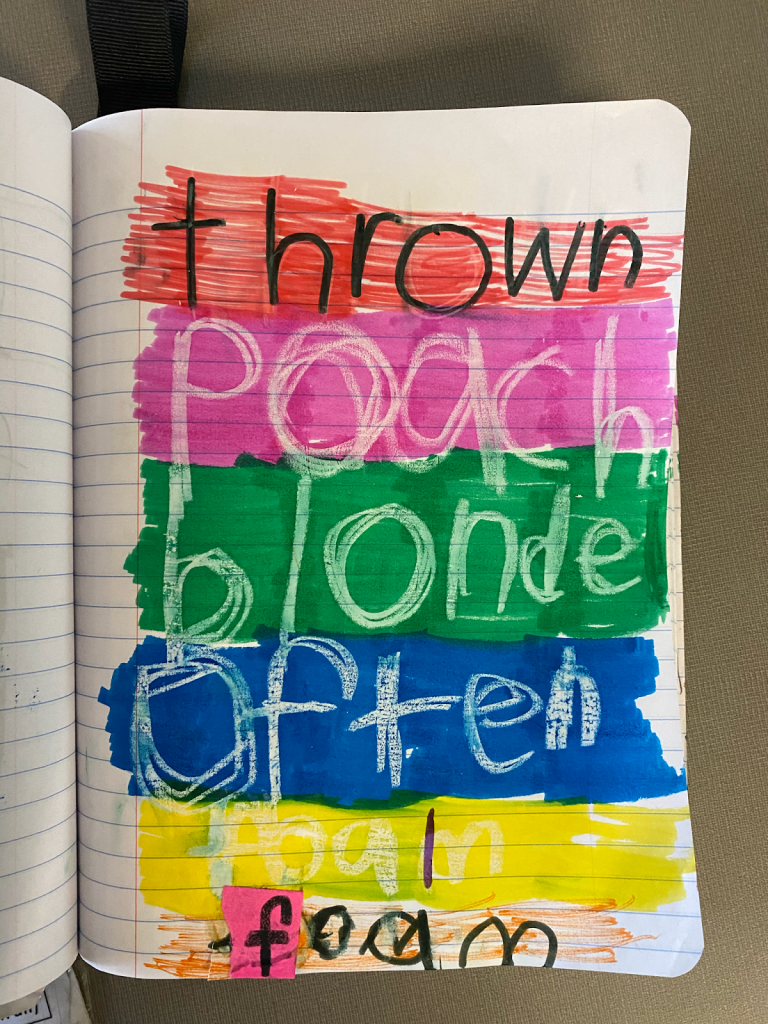

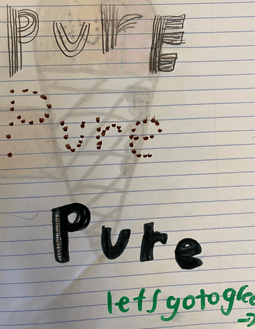

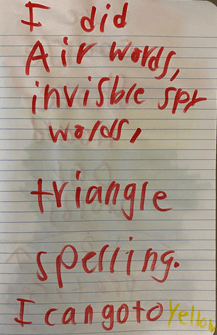


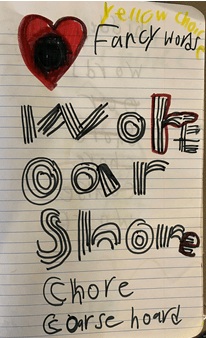
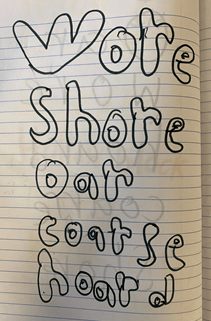


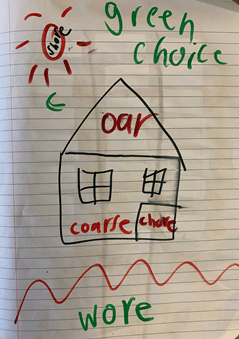


Wednesday Directions:
On Wednesdays the students go to the hanging file folders (pictures above) and find the word sort for their list. Then they cut, sort, and glue their spelling words based on the spelling pattern of that week. After they are finished, I have them read it aloud to me and check to make sure it is all correct, fixing any that are placed incorrectly. Then, they can go get the word search from the same folder.


Friday Directions:
First, I have them open their spelling notebook and practice their words for about 3 minutes. Then, I wait for them to have their headphones in, the correct video test open, spelling notebook put away, office up, and pencil in hand. When I see all this, I hand out the spelling test paper. The students take the test and turn it in. I made a master answer key to help expedite grading for myself. After that, I put a checkmark in the circle in the chart if they passed or did nothing if they didn’t. I also post a picture of the test on seesaw so that they and the parents can see how they did.
Here are examples of completed spelling tests – one where the kid missed more than 2 so I wrote (stay) so the parents knew s/he would be repeating the same list the next week, and the other that got a smiley face to pass.


If you have read this far, I hope you are inspired to set this up in your own classroom so that your students can each have their own list at their own level and achieve mastery before moving on. It is the truest way I have found to differentiate them!! My kids and my parents have LOVED this way of doing spelling each year that I have used it. No longer are half the class bored and the other half failing every test because it is over their head. I highly recommend anyone to use this method if you have the freedom to make your own choices for your class!!


 Teach 2 the Student